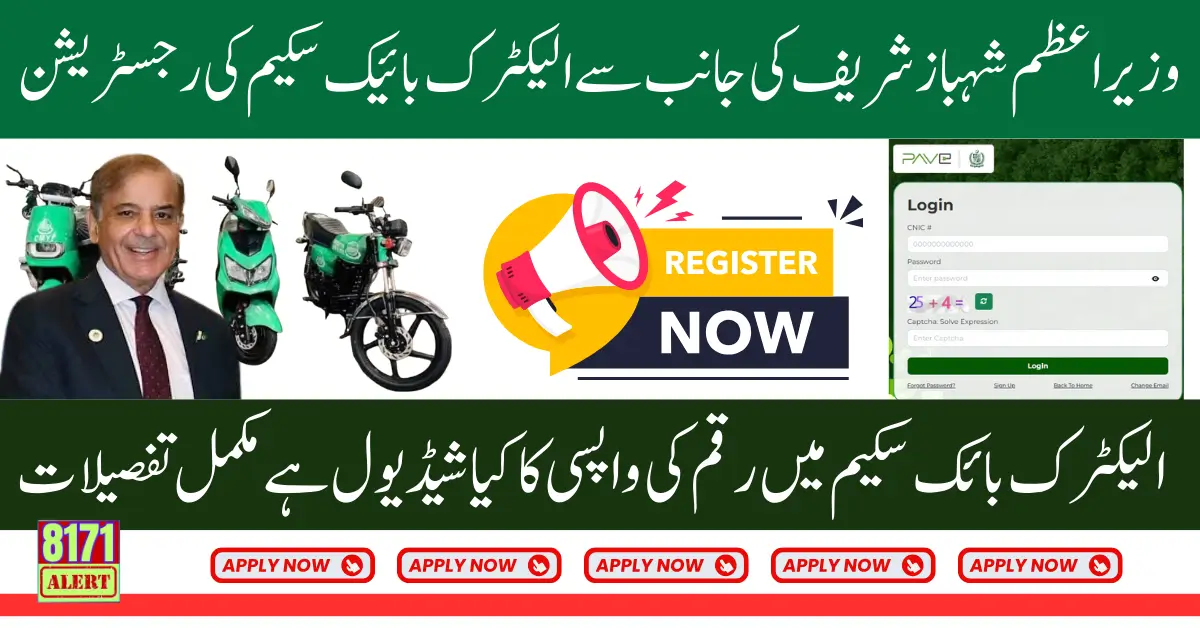
Pakistan is stepping on the gas — or rather, easing off it — with a bold stride toward its electric future. The PAVE Electric Bike Scheme 2025: A Greener Ride for Pakistanis is not just another government program. It’s a promise of cleaner air, quieter streets, and affordable rides for everyday folks.
Let’s break down everything you need to know — in plain English — about this revolutionary green movement that’s got Pakistan buzzing.
Quick Snapshot: The PAVE Electric Bike Scheme 2025
| Feature | Details |
| Launch Year | 2025 |
| Government Support | Subsidies, low-interest loans |
| Monthly Installment | As low as PKR 5,000 |
| Target Audience | Students, delivery riders, low-income workers |
| Environmental Impact | Zero tailpipe emissions, reduced air and noise pollution |
| No. of Bikes in First Phase | 100,000+ electric bikes |
| Battery Warranty | 2-3 years (varies by model) |
| Charging Time | 3-5 hours (fast-charging supported for select models) |
| Operational Range | 60–100 km per full charge |
Why Is Pakistan Going Electric?
Pakistan’s urban centers — like Lahore, Karachi, and Islamabad — choke under air pollution. Every rush hour, the air turns dense, grey, and unhealthy. Gasoline-powered bikes are a major culprit.
With more than 40% of Pakistan’s urban transport based on two-wheelers, switching even a fraction to electric means a gigantic leap in clean air and quiet streets.
And then there’s the economy—
✔️ Fuel prices hit record highs
✔️ Import bills balloon
✔️ Foreign reserves depleted
Electric bikes help cut fuel imports, keeping valuable dollars at home. It’s not just an environmental shift; it’s a savvy economic maneuver.
What Is The PAVE Electric Bike Scheme 2025 All About?
The PAVE Electric Bike Scheme 2025: A Greener Ride for Pakistanis — launched by the Ministry of Industries and Production — aims to make electric mobility accessible, affordable, and mainstream.
Key Objectives of the Scheme
- 🚲 Replace petrol bikes with eco-friendly electric alternatives
- 🎯 Target students, gig-economy riders, and low-income earners
- 💸 Provide easy financing options through banks and microfinance institutions
- 🔋 Encourage domestic manufacturing of EVs and batteries
How Affordable Are These Electric Bikes?
Let’s talk numbers — the kind that matter to everyday wage earners and college students.
Cost Breakdown for an Electric Bike under PAVE Scheme
| Expense | Estimated Cost (PKR) |
| Down Payment | 10,000 – 20,000 |
| Monthly Installment | 4,000 – 6,000 |
| Total Bike Price | 100,000 – 150,000 |
| Annual Maintenance | 2,000 (much lower than petrol bikes!) |
Thanks to government subsidies, extended warranties, and cheap loans, these bikes are proving to be a cost-effective alternative for those hit hard by inflation.
Who Benefits the Most?
This scheme isn’t just about going green. It’s about empowerment.
Target Groups
Students
No more standing in crowded buses or blowing half of your pocket money on petrol. Now, you can ride to your university affordably and, yes — stylishly too.
Delivery Riders
Young men working for apps like Foodpanda or Bykea often earn slim margins. Petrol eats up their profit. Electric bikes could double their take-home pay!
Breadwinners on a Budget
For families where each rupee counts, switching to electric bikes enables long-term savings without compromising mobility.
Environmental & Social Impact
A staggering 17,000 premature deaths occur annually in Pakistan due to vehicular air pollution. The PAVE scheme is a direct counter to this health crisis.
Big Wins of the PAVE Scheme
- 💨 Zero emissions — Clean air = healthier communities
- 🔇 Noise reduction — Electric bikes are whisper-quiet
- ⚡ Energy-efficient — Lower load on fuel imports
- 🛠️ Job creation in EV manufacturing sector
- ♻️ Supports long-term sustainability goals
Personalities Behind the Initiative
The scheme has backing from both public and private sector innovators.
Federal Minister for Industries – Gohar Ijaz
An outspoken supporter of tech-driven solutions, Ijaz has emphasized sustainable urban mobility as a key pillar of Pakistan’s “Clean & Green” agenda.
Net Worth & Economic Intent
While Gohar Ijaz’s estimated personal net worth is not publicly disclosed, it’s known that he comes from an influential textile background and has championed economic reforms prioritizing youth empowerment.
His push for this electric bike scheme reflects a deeper commitment toward long-term infrastructure and industrial transformation.
Are There Any Challenges?
Yes — every ambitious idea has its bumps in the road.
Top Hurdles
- ⚙️ Limited charging infrastructure in rural areas
- 🔌 Electricity shortages could hamper consistency
- 🏗 Local EV manufacturing still in early stages
- 🛡 Skepticism from petrol-bike dealers
But the government is already working on deploying solar-powered charging stations and incentives for local EV production.
Real-Life Story: Bilal’s Green Ride
“I used to spend Rs. 12,000 a month just on petrol,” says Bilal, a 24-year-old food delivery rider from Lahore.
“Since switching to an electric bike under the PAVE scheme, my cost has dropped to below Rs. 2,000 a month. I get to save, and I don’t arrive smelling like petrol anymore!”
It’s stories like Bilal’s that make this scheme more than a policy — it’s a pivot to a better life.
Final Thoughts: Why PAVE Matters
The PAVE Electric Bike Scheme 2025: A Greener Ride for Pakistanis is not just about reducing carbon emissions. It’s a social equalizer, an economic lifeline, and a health intervention combined into one.
With thoughtful execution and public support, this scheme could transform urban mobility, create green jobs, and carve a new path forward — one silent ride at a time.
Frequently Asked Questions (FAQs)
1. How do I apply for the PAVE Electric Bike Scheme 2025?
You can register online via the official Ministry of Industries portal or visit participating dealerships for guidance.
2. Can students qualify without collateral?
Yes! The scheme is designed specifically to help students with minimal guarantees and documentation.
3. Are spare parts available locally?
Yes. The government is encouraging local assembly, and major providers like Metro and Jolta are on board.
4. How long does it take to recharge a bike?
Most PAVE-approved models charge fully in 3–5 hours and can last a full day’s usage.
5. What if I live in a rural area without charging stations?
Alternatives like home charging and solar-powered charging kits are being rolled out to counter this.
Ready to Ride the Change?
The PAVE Electric Bike Scheme 2025 isn’t just another governmental drive. It’s Pakistan’s ticket to a cleaner, smarter tomorrow. So, whether you’re a student or a seasoned commuter — this ride might just be the fresh start you’ve been waiting for.